
The Provost’s Council gathered for our retreat this August during a difficult period of uncertainty and anxiety as the University navigates a way to redress the $65M structural deficit we face. Our day together was structured by our collaborative efforts to identify strategies to reduce expenses while supporting a shared vision of the future of the university:
The University of Oregon will be a public research university designed for human connection, animated by ambitious research concentrated in signature areas that push the boundaries of knowledge and enrich society, sustained by strong graduate programs, and enlivened by an undergraduate education rooted in distinctive learning experiences that lead to meaningful work and fulfilling lives.
We have now shared publicly this vision statement and the guidelines we are using to navigate the current budget challenges on the UO Provost website. At the beginning of the retreat, we returned to our shared values—courage, accountability, shared responsibility, candor, and hope—and to the purpose statement we have developed and refined during the first two years of my tenure as Provost.
To put the academic mission at the heart of the University through values-enacted, candid, collaborative leadership.
Last summer, we committed to moving from “coordinated leadership” to “collaborative leadership,” and I set an intention to share more information earlier with the Provost’s Council and to give the Council a more substantive role in shaping decisions.
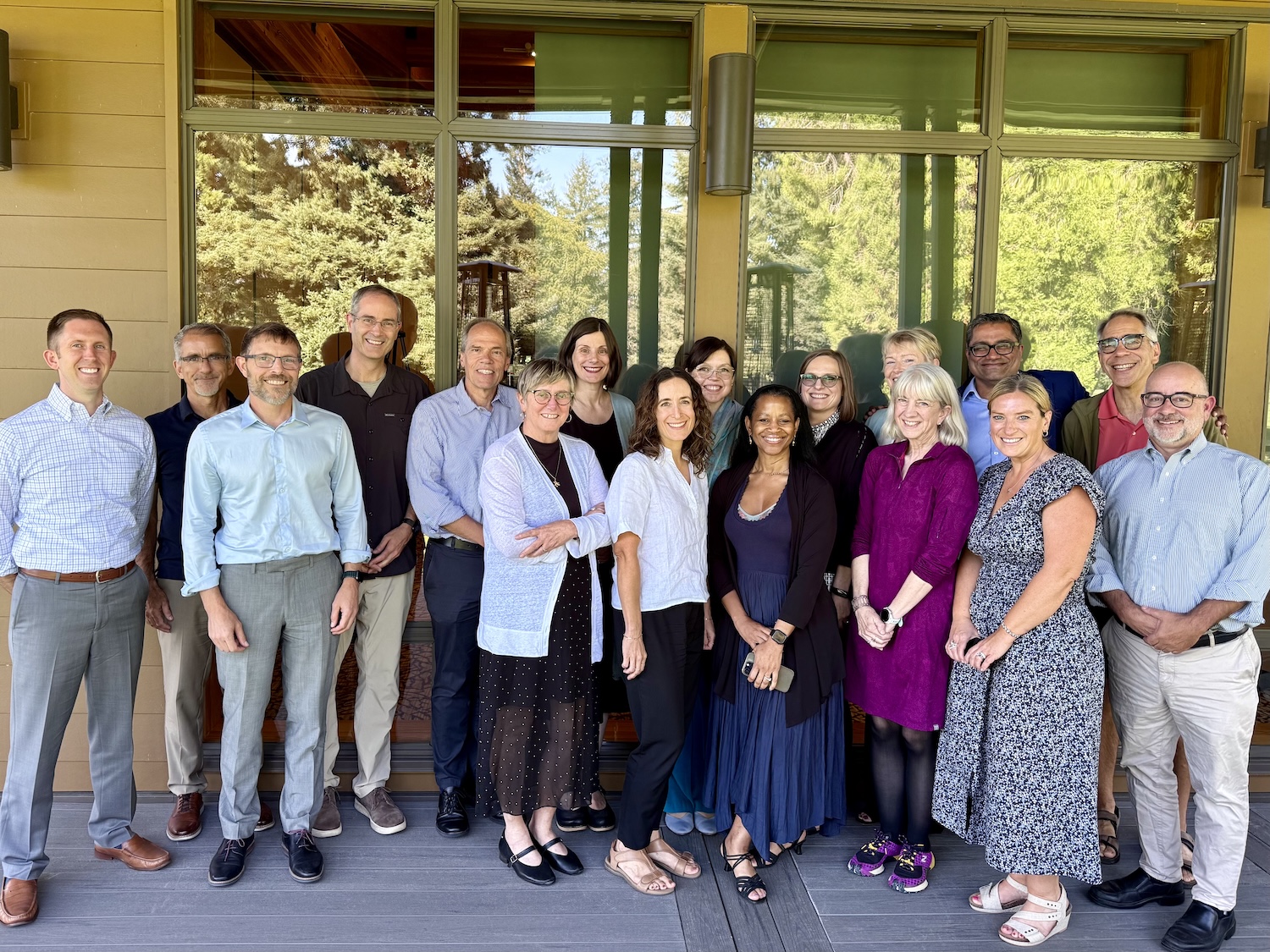
As I reflect on the past year, we have made meaningful progress in this regard. First, we empowered the deans to help shape the way the academic allocation is distributed. This required months of dialogue, that, however difficult, deepened our understanding of the different pressures each of the schools and colleges face.
Now, in the wake of the budget challenges we face, we are working together to articulate and refine the vision toward which the reductions will be made, to develop the guidelines that will inform our plans to engage the university community, and to discern how best to consult in open and honest ways with the University of Oregon Senate Academic Modifications Advisory Committee (AMAC) and with colleagues across the schools and colleges.
Indeed, for most of the morning, we considered various approaches to the structural deficit we face and how best to present the possibilities we were considering to AMAC and to members of our school and college communities.
To frame the discussion, I returned to this passage from longtime Princeton University President Robert Goheen’s The Human Nature of the University that speaks to the importance of broad consultation in university decision-making:
For when decisions are discussed widely and hammered out jointly among the principal parties of interest, they tend to be sounder institutional decisions, and the additional time and effort required to achieve them that way is usually justified by the wider, readier acceptance they are likely to find.1
The passage articulates well the importance and value of broad consultation. But it moves too quickly from wide discussion and joint hammering to readier acceptance. Let’s linger for a moment on the dynamics and difficulty of fostering that wide discussion, particularly when it comes to questions of the university’s budget, approximately 80 percent of which is tied up in salaries and benefits for the people who make the nature of the university human.
Living with Uncertainty and Ambiguity
There is no way to talk honestly about reducing a budget of this nature without also talking about losing cherished colleagues. To open and hold space for meaningful consultation in this context is to expose the broader university community to the anxieties and uncertainties endemic to making decisions that have real impact on real people who pour their hearts into the life of the university every day.
As a society, we put enormous emphasis on decisive leadership, in part, I surmise, because we are deeply uncomfortable living with ambiguity. This discomfort seeks relief in settled decisions. We pay far less attention to the quieter habits of patient reflection, the weighing of options, and living with possibilities we might not ultimately choose. These are, however, among the habits that enable a community to hold itself together through an extended period of not-yet-knowing.
The liminal space that opens between the moment we comprehend the scope of the challenge we face and the moment we finalize the decisions we need to make is rife with uncertainty and ambiguity. Whether our community holds together or falls apart in this liminal space speaks to the character of the connections we’ve established, the depth of our commitment to a shared purpose.
In a January 2026 episode of Hidden Brain called “Trusting Your Doubt,” host Shankar Vedantam and scholar Bobby Parmar discuss how uncertainty registers in the brain as something aversive, close to a threat. Our instinct is to resolve it as soon as possible, to reach for whatever decision alleviates the discomfort.
But our urge to dissolve ambiguities before they have ripened into wisdom pushes us toward underdeveloped decisions, choices that are poorer and less well-considered than those we would have come to in the due course of deliberation and with the insights that come through consultation and engagement. The unsettling sense of uncertainty, when recognized and embraced, sharpens judgment. The capacity to inhabit the liminal space of ambiguity without reaching too quickly for settled certainty is one of the most important personal and institutional habits we can develop.
As a community of scholars, this is, of course, familiar terrain. The whole life of inquiry unfolds in the liminal space of uncertainty. We embrace not-yet-knowing as generative. It animates our pursuit of truth, and we would not truncate it in exchange for the false comfort of lesser understanding.
This, then, should be the orientation we bring to the process of consultation to which we have been committed this year. As old certainties shift and we consider how best to chart a path forward, we need to turn toward one another in this liminal space of uncertainty to discern the wisest course of action.
Again and again over the past year, I have returned to the image of the slipstream that opens in the wake this disruptive period has created for higher education. Our willingness to embrace uncertainty now, and our trust in the wisdom that emerges in the wider discussions we have, will refine our shared vision for the future and deepen our commitment to one another in bringing it to life.