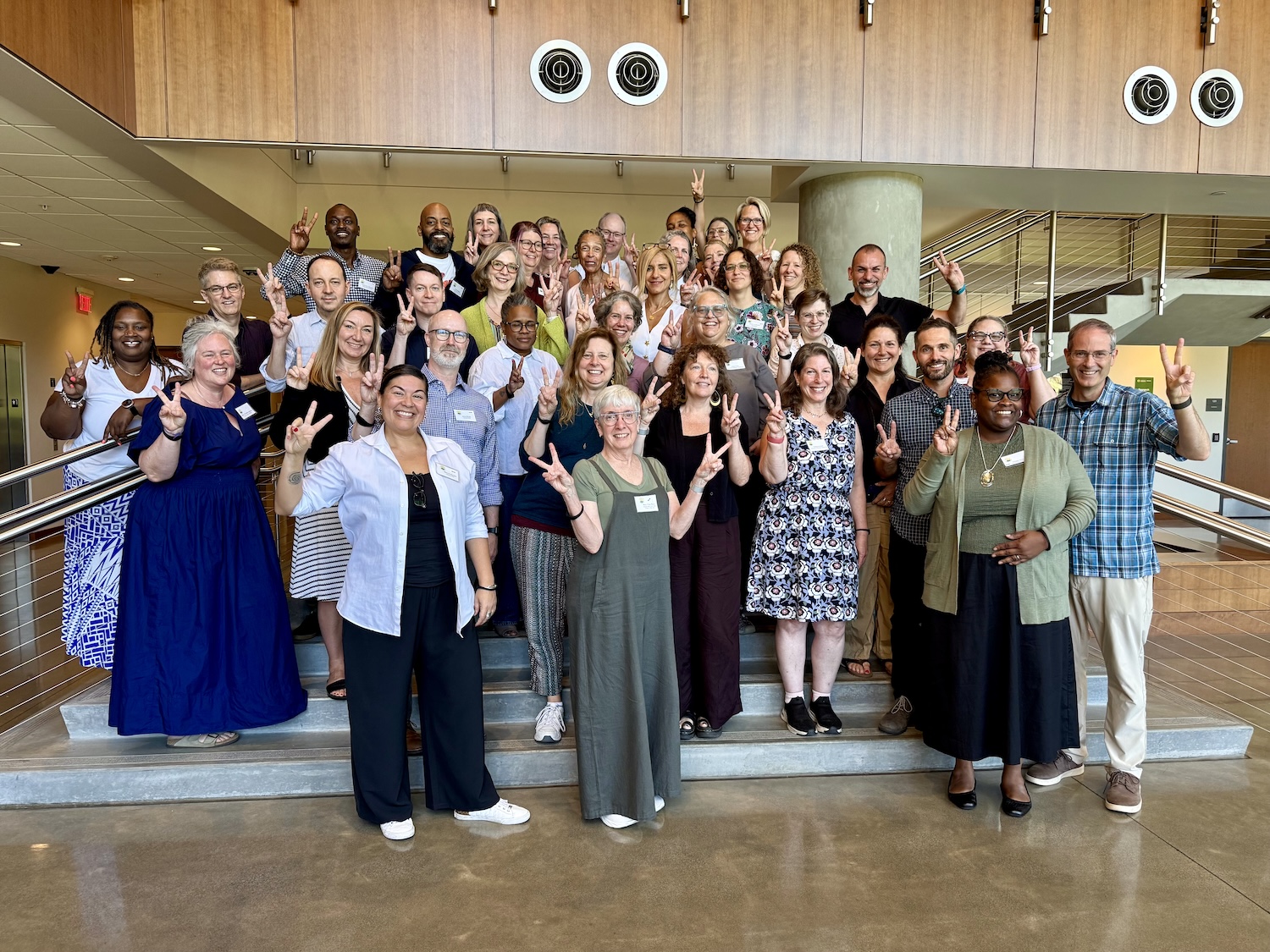
In reflecting on my experience at the second annual Values-Enacted Leadership Institute, VELI26, I keep returning to the hike to Wahclella Falls. In organizing the Institute, we wanted to create an opportunity for participants to experience the restorative beauty of the Columbia River Gorge.
”Is the hike difficult,” Dr. Nilajah Nyasum Sims asked during a break in the workshop.
The mile-long path begins down by the mouth of Tanner Creek, meandering up onto the ridge cut by the water over time before finding its way back down over the creek and across to the waterfall.
“It’s not easy, but it’s not too difficult,” I said.
“I’m afraid of heights,” she said, “so I am not sure I should go.”
“Well,” I replied, trying to recall just how high that path went, “if it gets too steep, I’ll hold your hand.”
So began a journey that became for me a lesson in practices of presencing and ethical imagination.
Practices of Presencing and Ethical Imagination
Practices of presencing lie at the heart of VELI. “Presencing” here draws on the definition Ruth Nicole Brown and I used for our 2022 SSRC/NEH Sustaining Humanities Infrastructure Program (SHIP) grant:
By “presencing” we mean the intentional practice of being wholly and authentically present to each other in ways that cultivate the trust necessary for personal and structural transformation.
Being present is an embodied practice. It requires focus and attention.
Ethical imagination has long been an inside joke of the HuMetricsHSS team, ever since, almost a decade ago now, I pressed for it to be included in our original deck of values cards. Ethical imagination is an idea central to my philosophical work, and I wanted to see how people played with it as they reflected on their values.
In values workshops over many years, the card would be considered, discussed, rejected, adopted, and questioned. Inevitably, when the question arose—what does “ethical imagination” mean?—the team would laugh and turn to me for some explanation. Early on, I remember, someone threw the card on the floor and rejected it. They thought it meant pretending to be ethical. Eventually, though, the phrase has come to express a core value of Values-Enacted Leadership Institute alongside community, equity, and integrity. This year, the team adopted it as a fourth with this explanation:
For us, ethical imagination means the capacity to imagine one’s way into the position of another in order to discern and enact the just conditions for mutual flourishing.
Ethical imagination is a disposition of character cultivated through practice.
The Journey is the Gift
The sky was ominous as we approached the trailhead this year. As we watched the storm move over the southern ridge of the gorge, we joked: perhaps part of the VELI experience should be a survival exercise: drop people off in the middle of the forest with only their values to sustain them!
As we waited for the rain to move through, I became aware of the way the weather was already asking me to pause in my goal-directed activity. I began to shift the focus of my attention.
And it was not long before the sun pushed through the clouds and we began the hike along the creek.
Nilajiah tells the story in words, images, and this awesome video better than I can, but for me, the experience was a gift.
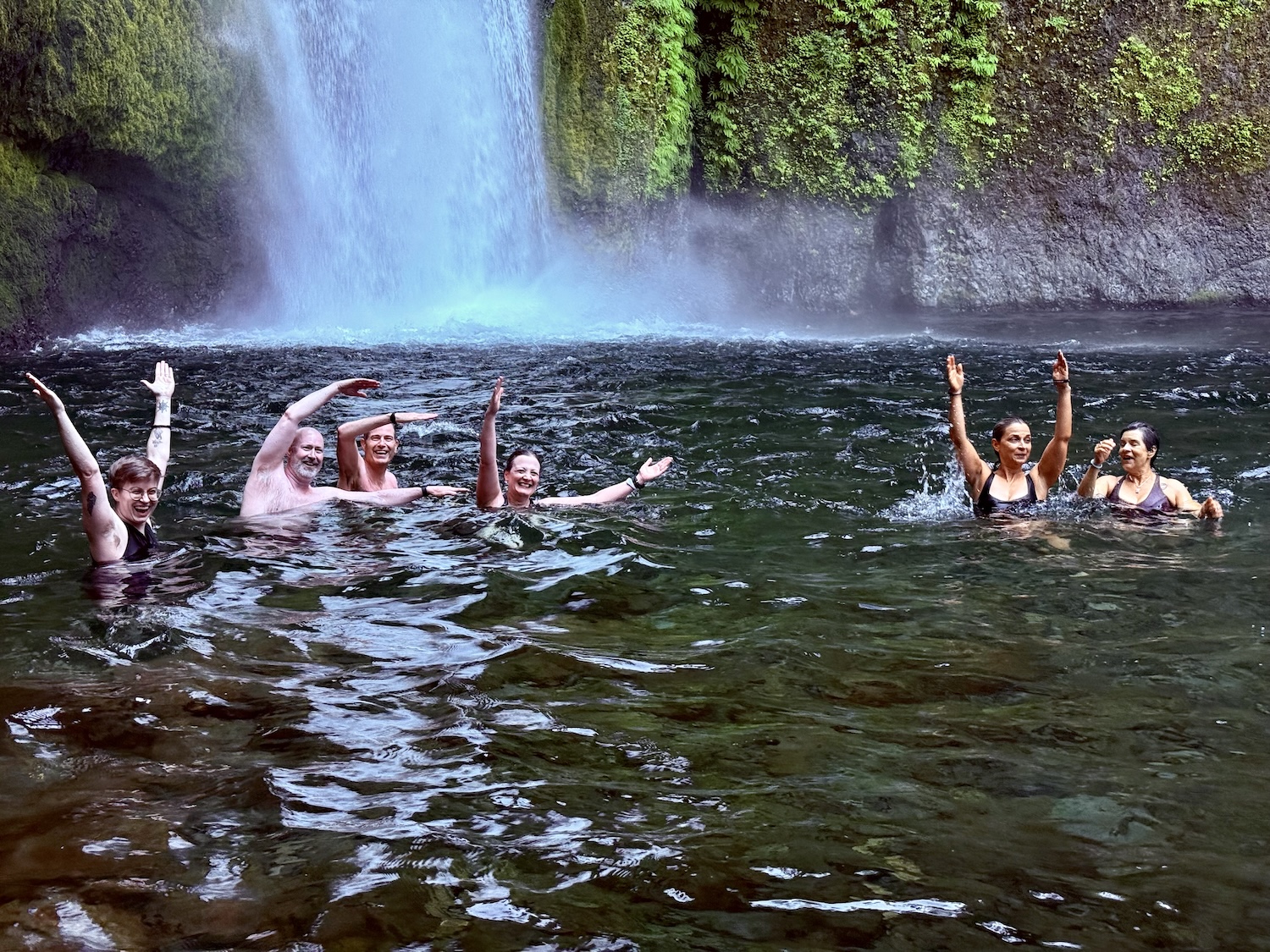
The year before, I approached the hike as a task with the falls as the goal. We hiked the mile to the falls as quickly as we could and enjoyed a swim before heading back. We did have fun, as you can see from this picture of us trying to spell “VELI” out in the cold, cold water:
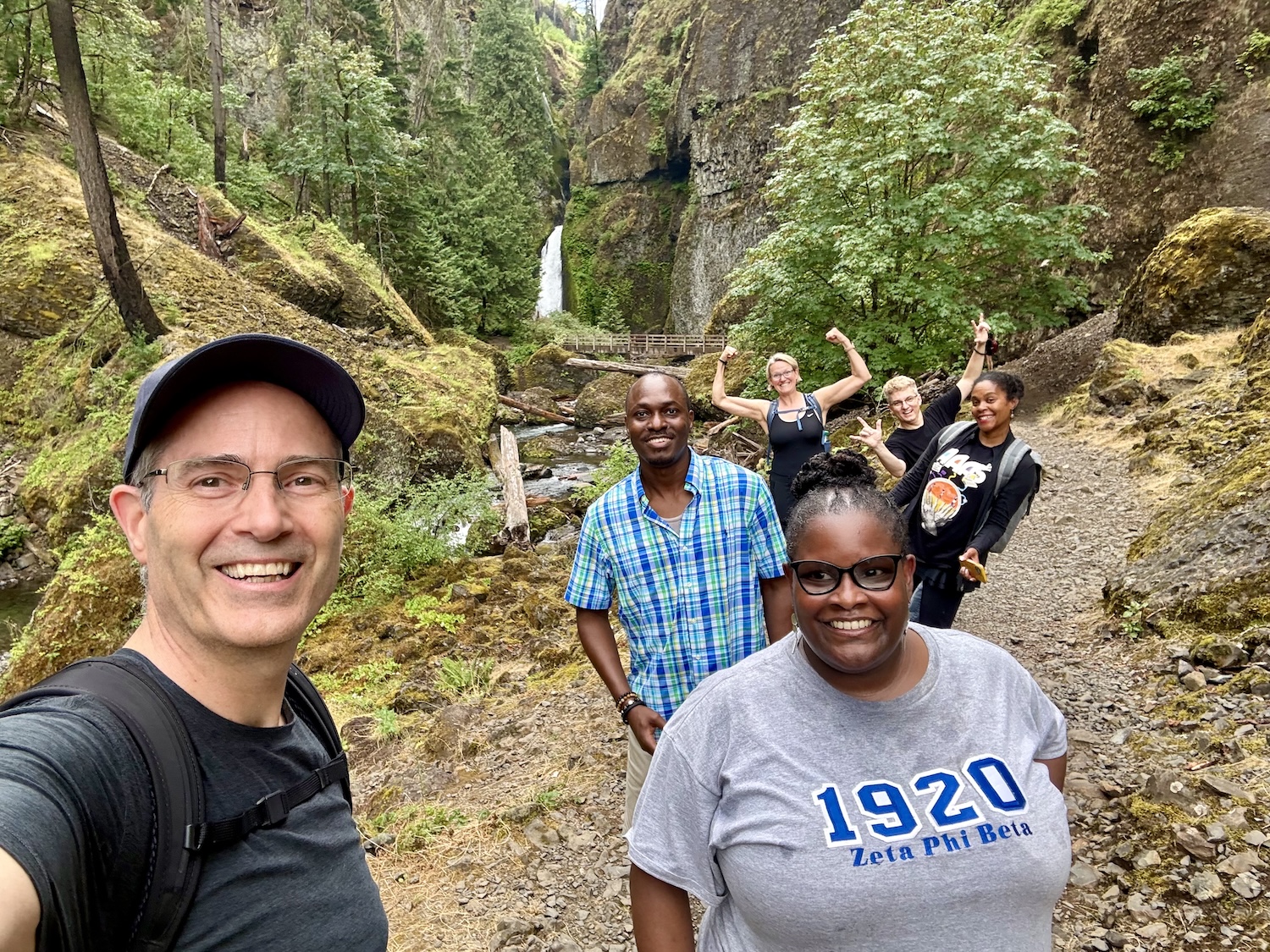
This year was different, because I was focused on Nilajah, her fear of heights, and what the journey would feel like for her. As the path began to ascend, I realized that the height it would quickly reach, which I love, would be daunting for Nilajah. So I slowed my pace and waited for her so we could begin the ascent together with Dr. Adekunle Adejumo.
I began to notice things that had escaped my attention the year before, little things, beautiful in themselves, and salient for the journey we were undertaking together: the way the sun illuminated the highest points of the ridge cut by Tanner Creek over generations, the slipperiness of the path, the angle of the ascent, the view of the water far below…
Last year, I sped past the beautiful texture of the tree roots along the way, the two tall trees that stand as sentinels at the apex of the path, the sound of the waterfall long before it can be seen…
This year, I noticed these things.
And I will long remember the laughter, the joy, the slowing of time, and the silliness of the running commentary we had along the way as we navigated each new challenge: a slippery rock here, a foot bridge there: “When was this bridge built, Chris? – I have no idea, Nilajah, but it’s very sturdy! I’ll look it up when I get back!”1 We were looking for anything to divert attention from the height so we could keep moving forward together.
And when we were close, very close—you could hear the roar of the waterfall—we came to a tricky place, a slippery rock just before the final foot bridge. It required us to map each step, one at a time. Right foot, here, shift your weight, left foot, there…
I began to understand that the journey was itself an embodiment of the values-enacted leadership process VELI is designed to cultivate. Rooted in care and joy, ethical imagination and courage, persistence and attention, each step moves us closer to the change we hope to accomplish in ourselves and in our work together.
So let me thank you, Nilajah, for helping me slow down and focus; for your courage, your laughter, the strength of your commitment, and for teaching me how to attend more carefully to where my feet are.
- According to a OregonHikers.org discussion board, the foot bridge seems to have been rebuilt in in February 1996 after a high water event washed out the previous foot bridge. Here is an eloquent article about the trail 50 years after the 1973 Tanner Creek Landslide that situates our human perspective on time in the broader temporal horizon of the natural world.