
The threefold understanding of “wake,” found in Christina Sharpe’s book, In The Wake: On Blackness and Being, and the notion of the “slipstream,” found in Norma Wong’s When No Thing Works, have shaped my thinking about how to navigate this period of disruption in higher education.
For Sharpe, the “wake” names three interconnected phenomena: 1) the disturbance caused by a body moving through water or air, 2) a vigil over the dead, 3) consciousness.1 While her work focuses on the impact of these three dimensions of the wake on Black life in the United States, we might also recognize how the wake uncovers three important dimensions of the current disruption in higher education.
Here, we might also draw on Wong’s notion of the slipstream, the draft created as an object moves through water or air creating a wake that moves at velocities comparable to the object itself. For Wong, the slipstream describes the sense of “collective acceleration” we feel in the wake of disruptive change.2
In the Wake
The experience of the wake is disorienting, its acceleration daunting. The disturbance calls our attention to all that has been lost, to ways of working that have run their course, to structures of support that are no longer available. “Wake” in the sense of vigil is salient here, particularly the practice of vigilance—of watching for dangers and opportunities.
In turbulent times, vigilance enables us to see what we might otherwise ignore: the fragility of structures we assumed were reliable, the urgency of candid conversations we have been deferring, the possibility of creating differently than we have before.
The slipstream offers us something else as well: momentum we didn’t generate ourselves. If we position ourselves wisely in the draft of disruption, we can move faster and farther than we otherwise could. If we remain vigilant and watchful, we might also discern the right moment to tack in a different direction—one more true to the values we hope to embody.
To position ourselves wisely in the wake requires heightened awareness and deepened consciousness—not only watchfulness, but also wakefulness. Here the third sense of “wake” gains importance. Self-consciousness is born of reflection. The space for self-reflection is readily destroyed by distraction. Distraction is a tactic of the forces of disruption intent on pulling us away from ourselves and one another. Attention, in the wake of distraction, opens space for self-reflection that can itself give rise to a collective consciousness more poignantly aware of our interconnectedness.
At its heart, university life is dedicated to wakefulness, to creating the conditions for understanding and imagination that awaken us to the world. This is its great power, and the great threat it poses to those who seek control of a docile and disconnected society. A collective consciousness of our interconnection rooted in a commitment to wakefulness has always been a threat to the forces of domination.
Toward the Change We Seek
Perhaps we might draft in the wake of the current disruption to make the transformative change in higher education we have long sought to enact. Not change imposed from outside, but change we shape together, grounded in our values, responsive to genuine need, oriented toward the communities we serve.
Nowhere is that orientation more essential than in how we connect our research and creative discovery to the world beyond campus boundaries. Never has it been more important to introduce a new generation of students to the research endeavor.
This month, I greeted a group of emerging scholars from 11 different states, planning to pursue 19 different disciplines across the humanities, the social and natural sciences, and the arts at the University of Oregon. These incoming first-year students have been selected for the inaugural cohort of the Provost Undergraduate Research Assistantship.
I oriented my remarks around this passage from marine biologist and environmentalist Rachel Carson: “the more clearly we can focus our attention on the wonders and realities of the universe about us, the less taste we shall have for destruction.”3
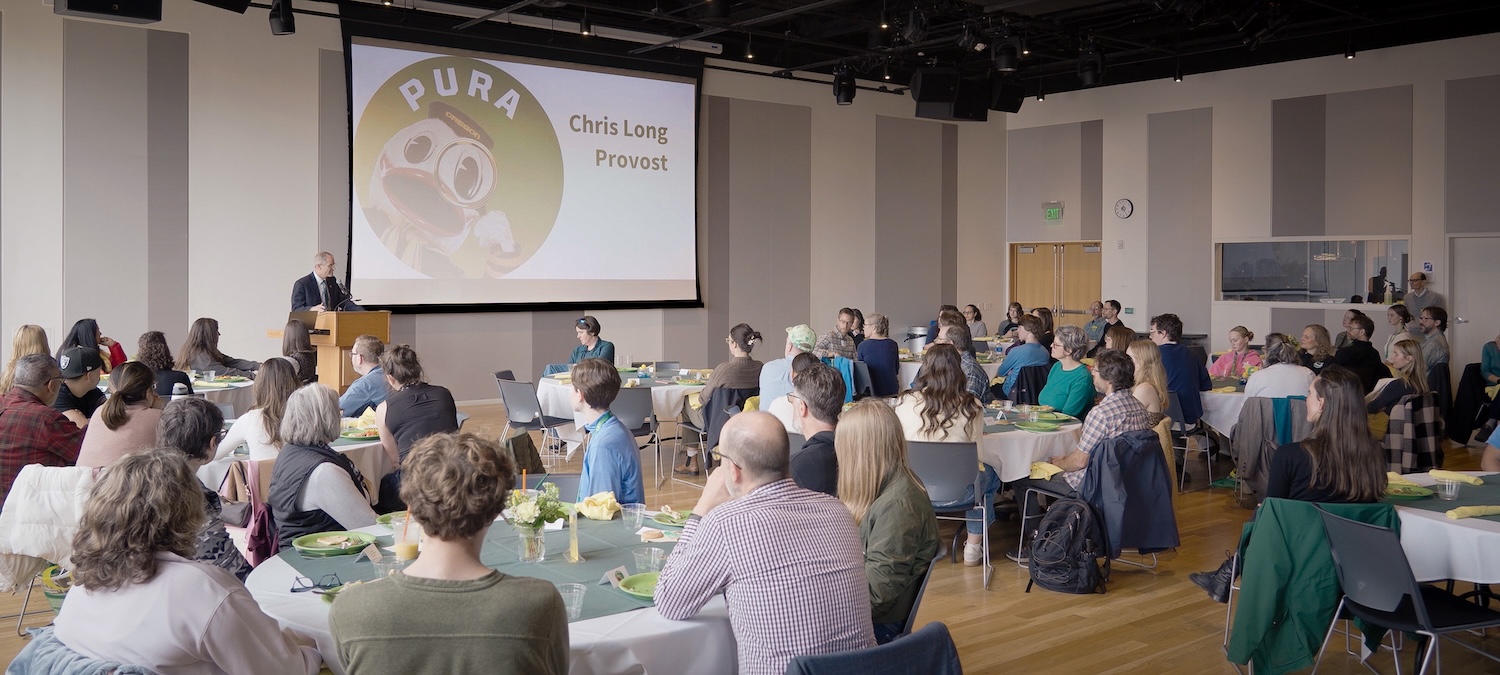
Here is part of what I said:
Research at the undergraduate level is transformative in ways that traditional coursework simply cannot replicate. In a classroom, you learn what others have discovered. In research, you discover something new — an idea or revelation about the way things work that we didn’t know before.
There is something exhilarating about that…not only the moment of insight, but the very search itself!
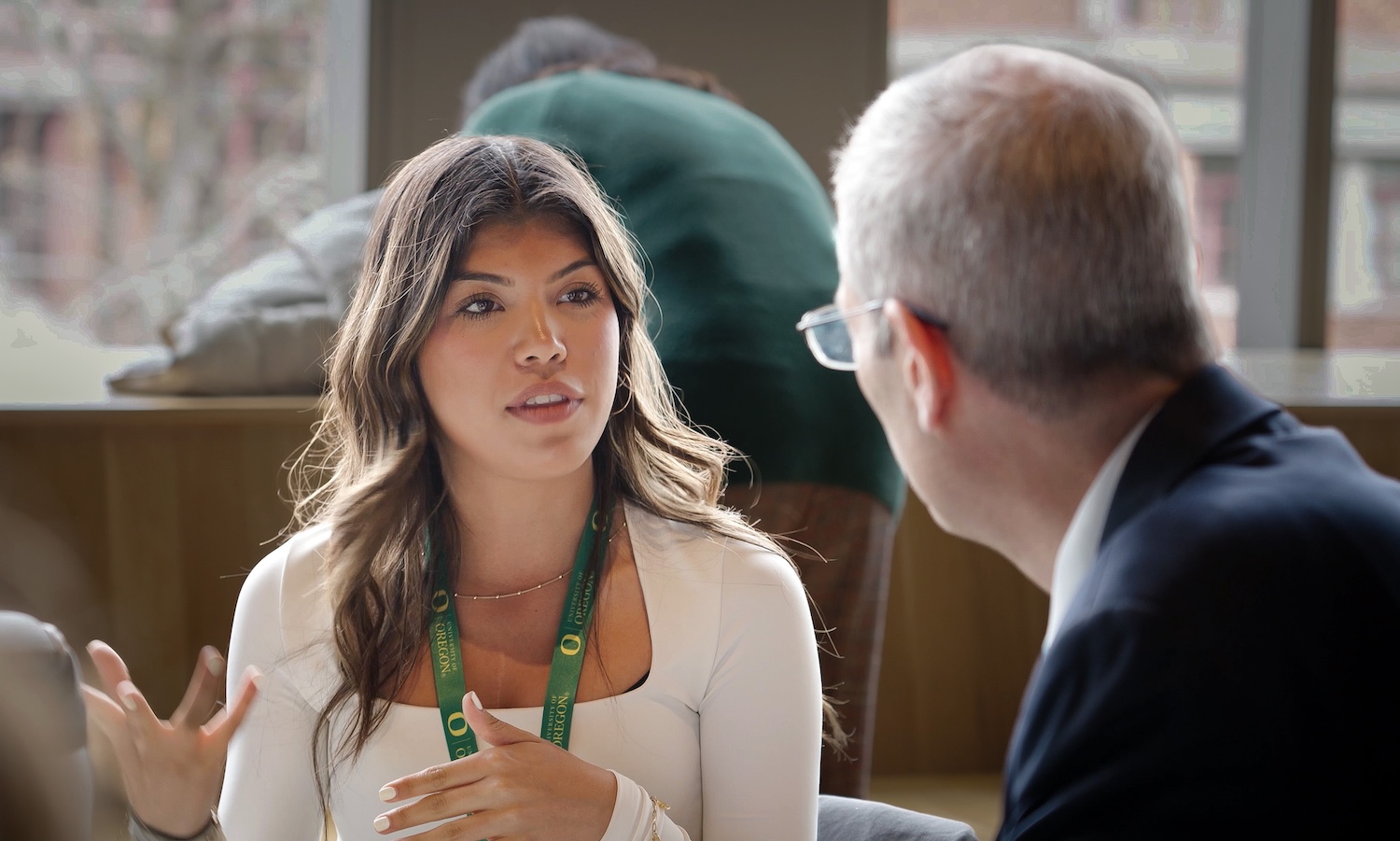
You learn what it feels like to ask a question no one has answered yet. You design a method for finding out, then hit dead ends and recalibrate. You experience the thrill of data that surprises you or results that challenge the assumptions you held. And you earn the hard-won satisfaction of insights that emerge only after months of patient work.
Ultimately, you learn that knowledge has never been — and never will be — handed down from on high. It is intuited, hypothesized, tested, shared, contested, and continually refined.
And you will see that you yourself can meaningfully contribute to the collective accumulation of generations of scholarship rooted in the human desire to know.
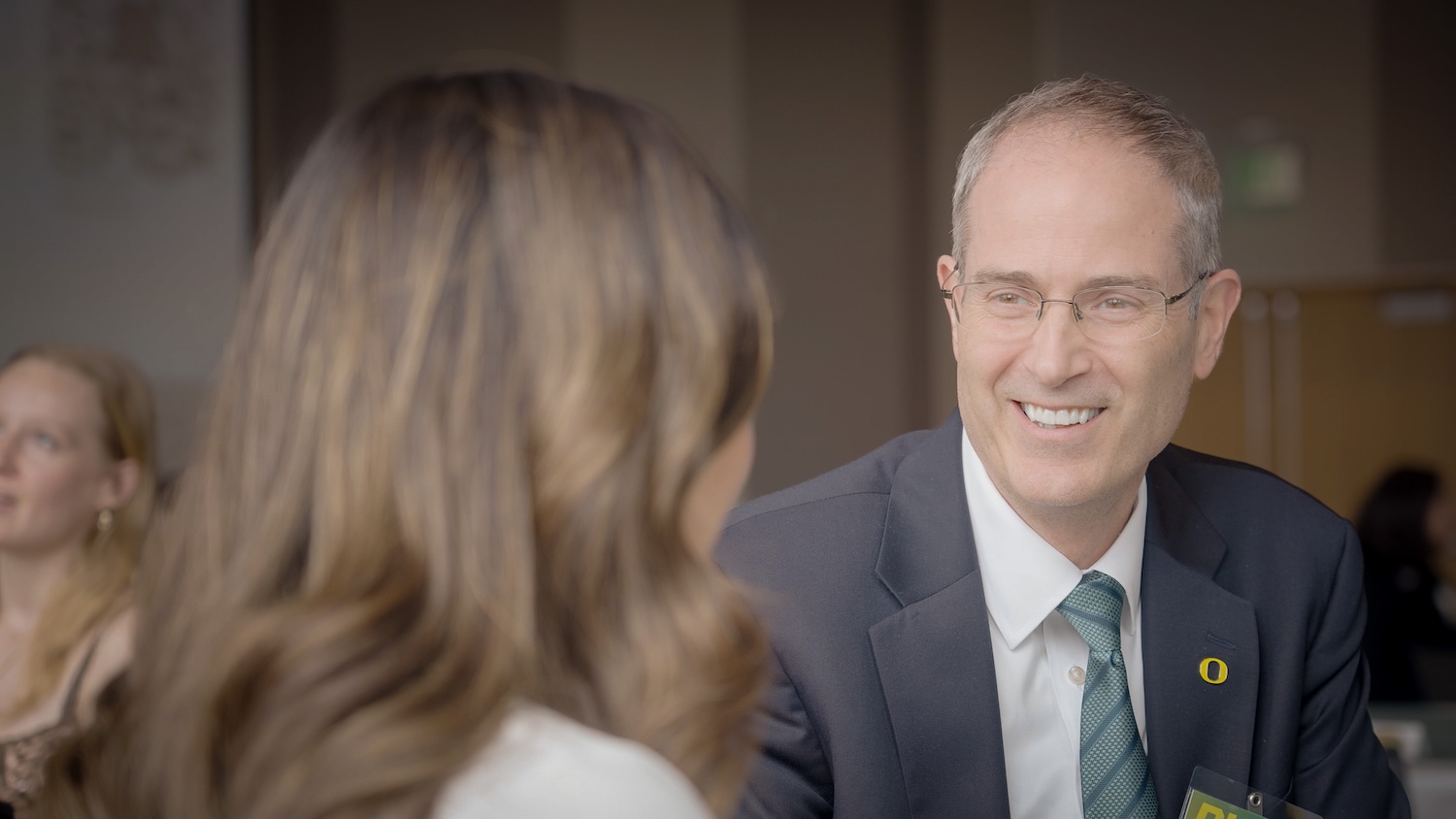
The Freedom to Pursue Truth Wherever It Leads
This freedom to ask bold questions, to challenge assumptions, to explore ideas that may unsettle the status quo, is the very work of the university.
This freedom matters, for scholarship and for democracy. As long as there are teachers and students willing to question, to wonder, to pursue truth even when it is hard or unpopular, the university will remain the beating heart of free society and a catalyst for a more just future.
In the roiling current of the present moment, university life finds “refinement and renewal” in the slipstream, where vigilance and collective consciousness converge, and we create a new reality together.
