
On February 13, 2026, I gave a keynote address entitled Values-Enacted Leadership in Practice to the Council of Graduate Departments of Psychology (COGDOP). The address outlines three aspects of the theory of change that has come to inform my academic and administrative work during this intense period of disruption. Each aspect is anchored to a story, sometimes two stories, in order to ground the theory of change in practice.
Two texts, neither of which I quote directly in the address, inform my approach.
The first, When No Thing Works, by Norma Wong, reminded me of the power of story, and specifically of how a story of an imagined future enables us to perceive the contours of a living reality descendants might one day experience.1 I begin with the story of an imagined future, and I invite those in attendance to imagine the future they hope to co-create.

The second text at work behind my address without being cited directly I found in Christina Sharpe’s essay, “And to Survive.”2 She calls our attention in that essay to the definition of care Bonnie Honig articulates in a 2017 Boston Review article:
[Care is]…to cultivate, daily, anticipation of another world and to live now dedicated to the task of turning this world into a better one.
Care manifests in quotidian practice. Habits of anticipation must be made real in our daily efforts to turn this world into a better one. In the wake of the present disruption, we must imagine and create.
In the Wake of Disruption
Disruption always creates a wake, and where there is a wake, a slipstream opens.3
Just as the long-distance runner drafts behind the leader preserving energy, biding time, anticipating the opportune moment, what the Greeks called, the kairos, the time, that is, for wise action, so too must we slip in behind this disruption prepared to create the university anew.
Action, if it is to be wise, must be done for the right reasons, in the right way, at the right time.4
A Theory of Change in Three Acts
The theory of change I have been refining for almost a decade now is rooted in these three dimensions of wise action that together create the conditions for meaningful change.
I think of them in organic terms and tie them to the dimensions of wise action:
- Values-enacted leadership is the fertilizer—Discerning the right reasons.
- Solidarity across academic leadership and faculty is the soil—Preparing the right way.
- Values-aligned tenure reform is the catalyzing energy—Intervening at the right time.
The keynote address is organized around stories connected with these three dimensions of this theory of change. I have curated resources connected to each below.
The Story of HuMetrics – Values-Enacted Leadership
Over the last decade, the HuMetrics team has been leading workshops designed to cultivate values-enacted leadership practice. At the Values-Enacted Leadership Institute each summer, we offer space to identify core values. And we provide time to explore how these values might best be put into practice. Slowly, we are creating communities of values-enacted practice.
- HuMetricsHSS Walking the Talk White Paper: https://humetricshss.org/walking-the-talk/
- Values Enacted Leadership Institute: https://humetricshss.org/veli/
Solidarity between Administration and Faculty
To truly reshape a university’s culture, intentional efforts must be made to cultivate meaningful solidarity between academic administrators and the community of faculty that beats at the heart of university life. I relate two stories in this regard, the first focuses on how the MSU deans tried to respond to the Larry Nassar sexual abuse scandal in 2018, the second reflects on how we tried to navigate budget challenges at the University of Oregon during the summer of 2025.
As the Larry Nassar sexual abuse scandal unfolded in 2018, myself and the other deans of Michigan State University witnessed the failure of university leaders to respond with humanity to the devastating stories of Nassar’s victims. In response, we drafted a statement of values—which, to this day, I still carry a copy of—that we returned to again and again, as we together tried to rebuild trust and credibility over several years.
- Eight MSU Deans Eight deans outline three imperatives for creating needed cultural change – Inside Higher Education – July 10, 2018.
- Failures to Listen – a reflective blog post on cplong.org one year latter. account a year later.
During the summer of 2025, the University of Oregon’s leadership team tried put our values into practice as we attempted to address a $30 million structural budget deficit, by pursuing an open and consultative decision-making process.
Yet we struggled to achieve our goal, in the face of long-standing distrust and cynicism in our community, which highlighted the need for us to continue to work on cultivating institutional habits of solidarity by creating and supporting structures that enable us to gather meaningful input from all layers of academic community.
Here are two articles from the Chronicle of Higher Education that cover UO’s summer 2025 budget reduction process:
- The U. of Oregon Says It’s Involving Faculty in Budget Decisions. Professors Say It’s ‘Fake Shared Governance.’ – Chronicle of Higher Education – September 4, 2025
- The Chronicle covers the decision not to lay-off tenure system faculty – Chronicle of Higher Education – September 9, 2025
Values-Aligned Tenure Reform
Because the tenure-track faculty experience sets the culture for all of higher education, meaningful, values-aligned reform to the tenure and promotion process can have a catalytic effect for our efforts to make transformative change more broadly across the higher education ecosystem.
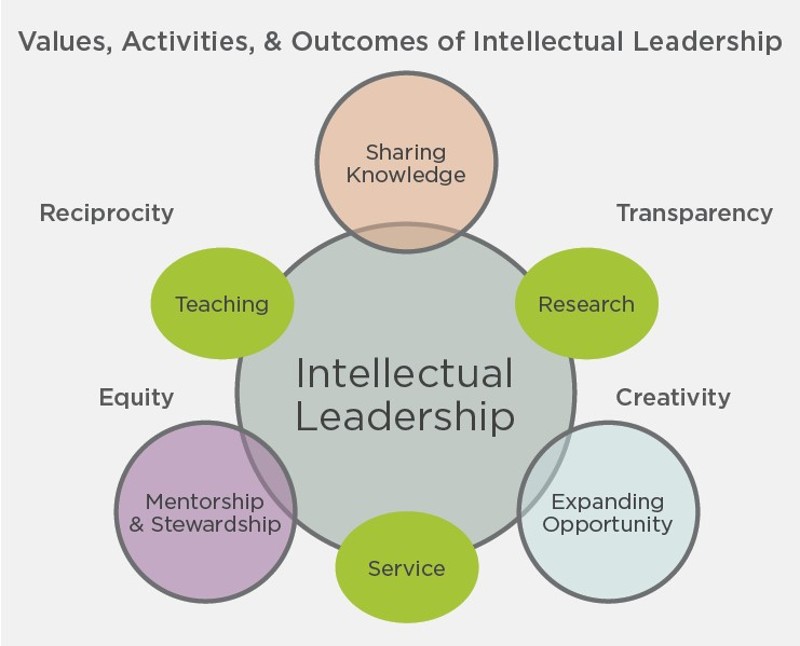
The Charting Pathways of Intellectual Leadership (CPIL) initiative, when paired with “future perfect thinking” in faculty annual reviews, can serve to actively dismantle the engine of alienation that our current tenure processes have too often become.
- Contribute to the Charting Pathways to Intellectual Leadership (CPIL) Toolbox!
- CPIL Article in Change Magazine: Charting Pathways of Intellectual Leadership: An Initiative for Transformative Personal and Institutional Change
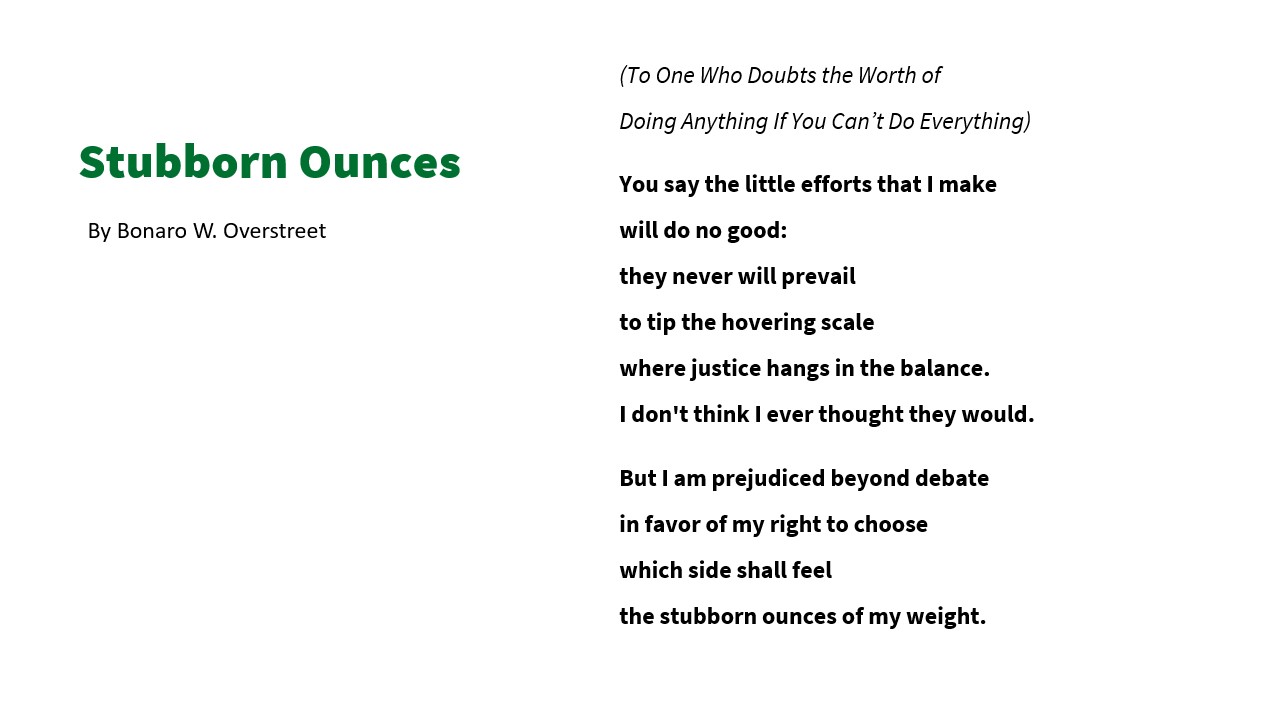
Stubborn Ounces
I conclude by returning to a poem that my step-father, Ted Loder, used to love, called Stubborn Ounces, by Bonaro W. Overstreet. She emphasizes the importance of putting the “stubborn ounces of your weight” each day, every day, on the side of creating the future we need.
- Wong, Norma. When No Thing Works: A Zen and Indigenous Perspective on Resilience, Shared Purpose, and Leadership in the Timeplace of Collapse. North Atlantic Books, 2024.
- Sharpe, Christina. “‘And to Survive.’” Small Axe: A Caribbean Journal of Criticism 22, no. 3 (2018): 171–80, 172. https://doi.org/10.1215/07990537-7249304.
- The notion of the slipstream has been called to my attention by Norma Wong: Wong, Norma. When No Thing Works: A Zen and Indigenous Perspective on Resilience, Shared Purpose, and Leadership in the Timeplace of Collapse. North Atlantic Books, 2024.
- Sachs, Joe. Aristotle: Nicomachean Ethics. With Albert Keith Whitaker. The Focus Philosophical Library. Focus Publishing, 2002, 1105a30-33.
